 Skip to content
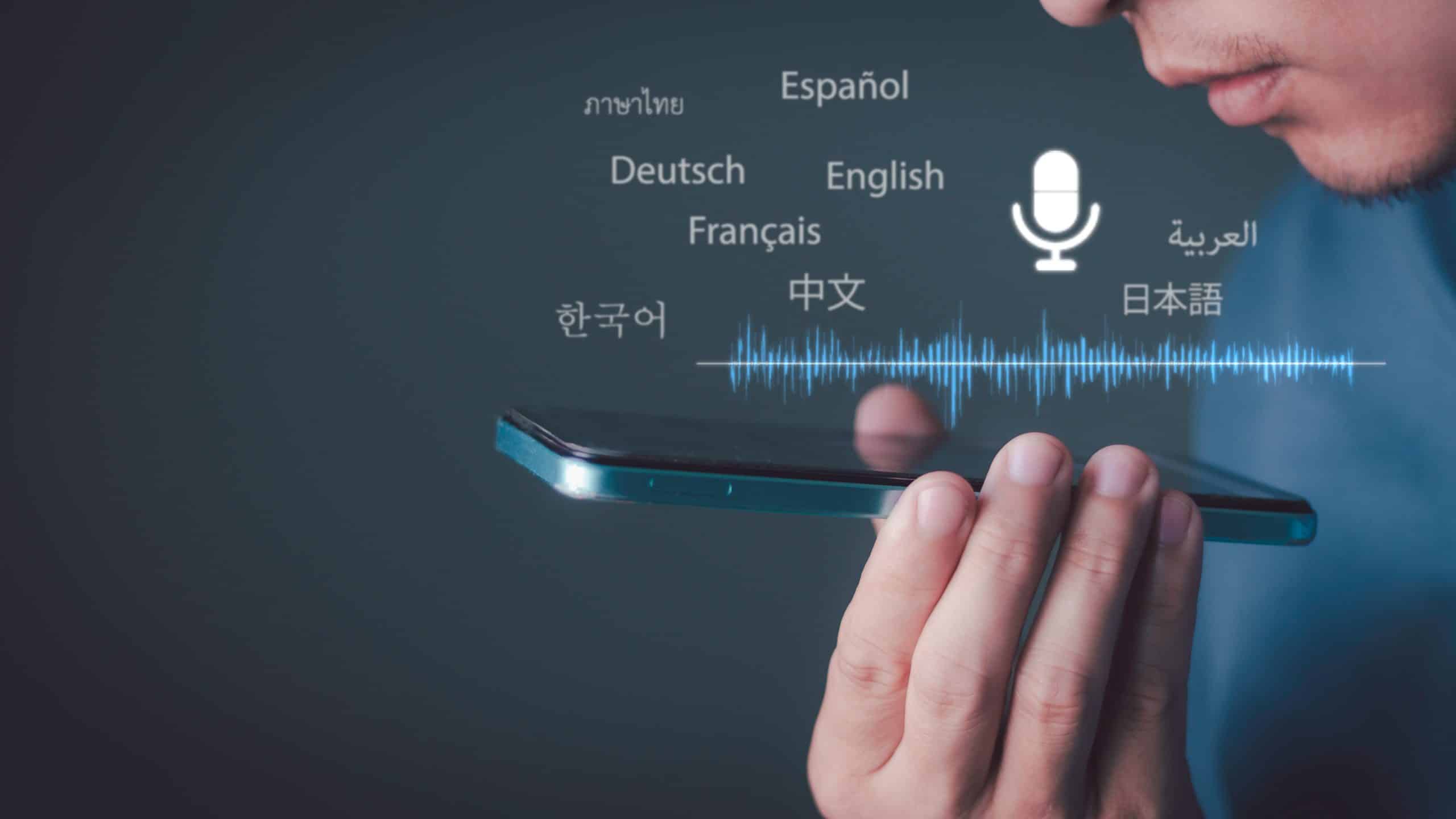
The copper wires of the 20th century are finally quiet. While businesses once relied on the physical hum of a PBX closet, the modern communication landscape has shifted entirely into the realm of bitrates and neural networks. This evolution is about the aggressive fusion of VoIP with AI to create a system that thinks before it rings.
For the modern stakeholder, the math is becoming impossible to ignore. Industry data from 2026 suggests that companies adopting autonomous agents are seeing up to a 75% reduction in operational costs per call, moving the needle from an average of $7-12 per human interaction down to roughly $0.40 per AI-handled session.
This is not a marginal gain. It is a fundamental restructuring of how a cloud VoIP provider delivers value to the bottom line.
The Neural Dial Tone: Why Intelligence is Non-Negotiable
Voice over IP was always destined to be more than a cheap way to make long-distance calls. Because VoIP converts audio into data packets, it provides a perfect “API hook” for Large Language Models (LLMs) to listen, understand, and respond in real time.
We are no longer talking about simple “press one for sales” menus but rather an AI voice assistant for SMB needs that can hold a twenty-minute conversation about complex billing disputes or technical troubleshooting without breaking a sweat.
When you strip away the marketing jargon, the value proposition for a VoIP small business provider is pure efficiency. By deploying an AI voice assistant for SMB operations, a local firm can effectively eliminate the “dead air” of on-hold time, leading to an estimated 18% productivity boost from AI auto-attendants alone.
These systems route and resolve calls. They handle the “low-hanging fruit” of scheduling, basic FAQ, and status updates, allowing your human staff to focus on high-value closing or complex problem-solving that requires a literal human touch.
Solving the Latency Logic
In the world of business VoIP systems, your biggest enemies are latency and jitter. Think of latency as the “awkward pause” in a conversation where both people start talking at once because the signal is lagging.
Jitter is the variation in that delay, which makes voices sound like they are underwater or robotic. When you introduce an AI agent into this mix, the stakes for your business phone systems get even higher.
Suppose the network stutters, the AI loses the context of the sentence. It might miss a “not” or a “now,” completely flipping the meaning of a customer’s request. This is why a significant network and infrastructure upgrade is often the first step in any serious AI-VoIP integration.
You cannot run a Ferrari on a dirt road, and you certainly cannot run a sophisticated AI voice assistant for SMB support on a congested, unoptimized local area network.
Technical Synergy: SIP Trunking and API Hooks
To understand the “how” behind these VoIP productivity tools, we have to look at the plumbing. At its core, modern VoIP relies on Session Initiation Protocol (SIP). If VoIP is the actual conversation, SIP is the digital concierge that sets up the call, checks if the other person is available, and then hangs up the phone when you are done.
An AI voice assistant for SMB functions by “tapping” into these SIP streams via specialized media gateways.
Once the audio stream is captured, it is fed through a Natural Language Processing (NLP) engine. The AI identifies the caller’s intent, pulls relevant data from your customer relationship management (CRM) software, and formulates a response. This is all in under 200 milliseconds.
This level of integration is what separates a generic VoIP provider SMB from a high-tier partner. You aren’t just buying a phone line; you are buying a 24/7/365 digital employee that never takes a sick day and speaks 40 languages fluently.
Bridging the Cost-Quality Gap
Small and mid-sized businesses often feel trapped between expensive “enterprise-grade” solutions and cheap, unreliable “prosumer” apps. However, the rise of managed VoIP services has significantly leveled the playing field.
By leveraging the cloud, an SMB can access the same AI-driven VoIP business solutions that Fortune 500 companies use, but at a price point that fits a tighter budget.
The ROI is baked into the labor savings. If an AI agent can deflect 70% of routine inbound calls, your front-desk staff or support team suddenly has hours of their day back. Those hours translate directly into better outbound sales efforts or deeper customer success initiatives.
When you look at the AI VoIP features available today, it becomes clear that the “phone” is now the most powerful data collection tool in your office.
Navigating the Implementation Minefield
Transitioning to a high-intelligence communication stack is rarely a “plug-and-play” affair. It requires a deep dive into your existing workflows to identify where automation will help and where it might actually frustrate your clients. Many businesses make the mistake of over-automating, losing the “blue-collar” authenticity that built their brand in the first place.
This is where a cloud VoIP provider with a strategic mindset earns its keep. You need a partner who understands that a 12-man HVAC shop has different communication needs than a 50-person legal firm. Success lies in the “hybrid” model: using AI to handle the volume and humans to handle the nuance.
If a caller sounds frustrated, the AI should detect that shift in sentiment and immediately “warm transfer” the call to a human manager, along with a full transcript of what has already been discussed.
Security in the Age of Voice Synthesis
As voice AI becomes more convincing, security becomes the new frontier. We have seen a rise in “vishing” (voice phishing) where bad actors use AI to mimic a CEO’s voice to authorize fraudulent wire transfers. For any managed VoIP services provider, biometric security and multi-factor authentication for voice are now standard requirements.
Your business phone systems must be hardened against these threats. This includes end-to-end encryption for all voice traffic and strict API security protocols to prevent your AI assistant from leaking sensitive customer data to the wrong database. It is building a fortress around your conversations, ensuring that while your communication is “open” to customers, it remains “closed” to those who would exploit your data.
The Path Forward with Safebox Technology
The reality of 2026 is that a dial tone is a commodity, but an intelligent ecosystem is a competitive advantage. You can no longer afford to treat your phones as a separate silo from your IT strategy. They are the same. To truly capitalize on the 75% cost reduction and 18% productivity gains mentioned earlier, you need a partner who speaks both “network” and “narrative.”
Safebox Technology specializes in bridging this exact gap. We don’t just sell you seats on a platform; we engineer a communication strategy that aligns with your specific business goals.
Whether you need a full network and infrastructure upgrade to support high-fidelity AI interactions or you are looking for Safebox Tech’s co-managed IT services to augment your existing team, we provide the technical muscle to keep you ahead of the curve.
We move your business from a legacy mindset to a future-proofed reality. By integrating the latest AI VoIP features with a “boots-on-the-ground” understanding of small business operations, we ensure that your technology serves your people. Don’t let your business get left behind in the silent era of communication.
Contact Safebox Tech today to begin building your AI-driven communication ecosystem.