 Skip to content


A business phone system should help people keep communicating when normal operations are disrupted. VoIP continuity for SMBs depends on more than moving calls to the cloud. It requires a design that considers internet availability, local power, call routing, mobile access, and a clear failover plan before an outage begins.
The benefit of a cloud-based phone platform is flexibility. Calls can often be rerouted to mobile apps, alternate locations, or other numbers without relying on one office phone cabinet. The weak point is that VoIP still depends on connectivity and powered equipment. Business continuity planning should account for both sides of that equation.
Why Communication Belongs in Every Continuity Plan
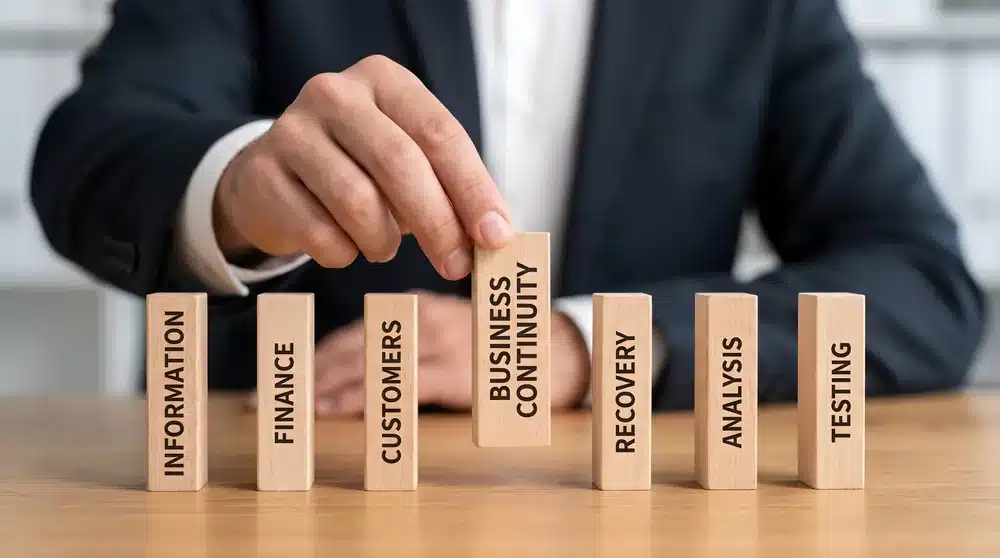
Ready.gov’s business emergency planning guidance specifically includes communications planning, IT support and recovery, and business continuity. That is important because an outage affects more than internal conversations. Customers may need updates, employees need instructions, and vendors may need alternate ways to reach the people responsible for urgent work.
Good business continuity communications for SMBs start by identifying which calls cannot wait. Sales inquiries may be routed differently from service calls. A medical office, field-service company, law firm, or multi-location retailer may also need separate queues, after-hours rules, and escalation paths. Map those requirements before choosing technical features.
Modern business communication solutions can then support those priorities with auto-attendants, call queues, forwarding, voicemail-to-email, and mobile or desktop softphones. The technology is useful because it gives teams more options when the normal workplace is unavailable.
Build Redundancy Around Internet and Power
The first continuity question is simple: what happens if the primary internet connection fails? VoIP redundancy for SMBs may include a secondary internet circuit, cellular or LTE failover, or routing calls to users who are working from another network. Safebox Technology’s VoIP service page notes that LTE failover is available for businesses in Naples and Fort Myers to keep phone service operational when the primary connection goes down.
The second question is power. A 2026 FCC order on technology transitions notes that interconnected VoIP can continue during a power outage when internet service is available and the end user maintains backup power. That means continuity planning should include the modem, firewall, network switches, wireless equipment, and any desk phones that must stay powered, not only the phone service itself.
Communication backup systems for SMBs should also include a manual fallback. Keep an up-to-date contact list, document alternate numbers, and decide who can change call routing if the automated plan does not work as expected.
Use Cloud Calling to Keep Teams Reachable
Safebox Technology offers business VoIP services with mobile and desktop softphones, call routing, auto-attendants, and cloud-based access. Those features make disaster recovery with VoIP more practical because employees can receive calls away from the office when the phone platform is configured for remote use.
A cloud VoIP provider for SMBs should be able to explain where calls go when a site is offline. Ask how quickly routing can be changed, whether users can answer from mobile devices, what happens to voicemail, and whether call queues can be redirected to another office or external number.
VoIP failover for SMBs should be tested before it is needed. Run a planned exercise in which the primary internet path is disconnected, confirm calls still reach the correct people, and document anything that fails. A short test can reveal issues with firewall rules, device power, mobile app access, or outdated routing instructions.
Define What “Reliable” Means for Your Business
VoIP uptime for SMBs should be evaluated in business terms, not only as a provider percentage. If the hosted platform is online but your local network is down, employees may still be unable to use desk phones. If the office is inaccessible, staff need another way to answer. Reliability therefore depends on the whole path from carrier to internet connection to local network to user device.
This is why managed VoIP services can be useful for organizations that do not want to troubleshoot carriers, network quality, routing, and handset configuration separately. Safebox states that its VoIP service includes optimized network configuration, quality-of-service controls for voice traffic, LTE failover options, and 24/7 monitoring.
For businesses with remote staff or multiple offices, Safebox also provides fully managed IT services that can coordinate IT support, cybersecurity, cloud systems, and VoIP across distributed teams. That broader model can simplify IT communication solutions for SMBs that otherwise depend on several disconnected vendors.
Business Continuity and VoIP FAQ
Will VoIP work during a power outage?
It can, but the required internet and network equipment must remain operational. Backup power and an alternate connection may be needed depending on the outage.
Can calls automatically move to mobile phones?
Yes, many business VoIP platforms support forwarding, mobile apps, and alternate routing. The exact behavior depends on how the system is configured.
What should a company test before storm season or a planned outage?
Test internet failover, backup power, inbound and outbound calling, mobile softphones, voicemail, call queues, and access to administrator controls.
Is a second internet connection necessary for VoIP?
Not for every business, but organizations that cannot tolerate a complete phone outage should consider redundant connectivity or cellular failover as part of the risk review.
Who should be able to change emergency call routing?
Assign at least one primary and one backup administrator, and document the approved routing plan so changes can be made quickly without guesswork.
If phone availability is part of your continuity plan, request a VoIP discussion with Safebox Technology to review routing, failover, mobile access, and the network dependencies behind your current system.